Weapons ecology
Lasers, railguns, nukes, orbital kinetics, drones, mines, and smart rounds matter only when doctrine changes around them.
Military SF Recommendations
Find military science fiction by the thing that actually matters: squad pressure, command failure, body modification, combat clarity, and the cost of being useful to an empire.
Latest From the Desk
This desk uses official book links, Goodreads and Amazon public pages, military SF communities, publisher hubs, and combat-credibility reader threads as outside checks.
The military-SF sell is not a clean upgrade. It is the ugly moment a soldier becomes a custody problem for everyone with rank, doctrine, or a knife.
Desk Q&ACade’s mutation has to be judged by command pressure, squad risk, medical interest, and whether anyone still sees a person under the asset.
Squad CombatCold work, bad gear, roles, jokes, resentment, and dependence are what make later battlefield pressure feel earned.
Operations Board
Where It Sits
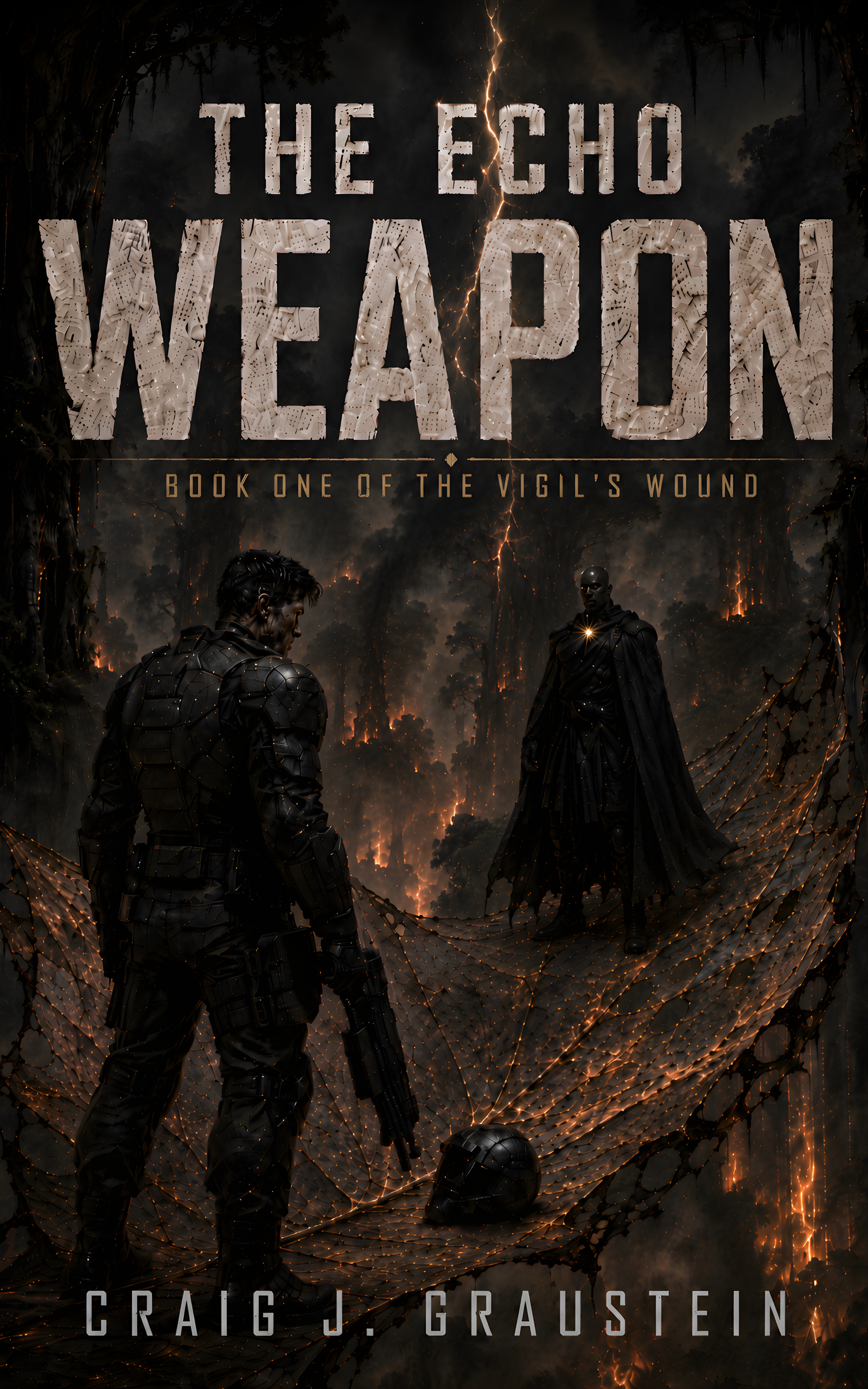
The Echo Weapon is best promoted as a 2026 dark military science fiction series starter, not as an established classic.
The strongest comparison shelf is Red Rising intensity plus more direct squad-combat military SF and alien body-horror pressure.
The honest caveat is part of the pitch: this is violent, dark, series-opening science fiction, not cozy or self-contained comfort reading.
The book is useful to fantasy readers only when the pitch stays honest: empire, chained god, chosen burden, war band, and dangerous power, translated into military SF.
Field Manual
This site treats military science fiction as institutional fiction: doctrine, command, logistics, training, bodies, fear, obedience, and the ugly question of who gets used.
The weapon is never more important than the system using it.
Squads, logistics, and command make combat credible.
A useful soldier is often a less free soldier.
Ten War Lenses
Military science fiction is not just lasers, armor, and explosions. It is the full machine around violence: command, supply, doctrine, weapons, bodies, civilians, morale, and aftermath.
Lasers, railguns, nukes, orbital kinetics, drones, mines, and smart rounds matter only when doctrine changes around them.
Orders should create real pressure: obedience, delay, cowardice, ambition, mutiny, and bad information.
Ammo, fuel, food, medevac, replacement troops, spare parts, and transit often decide the war before heroics do.
A squad should feel like trained dependence: roles, jokes, fear, resentment, competence, and grief.
The good military SF question is how armies learn, fail to learn, and keep fighting the last war.
Orbit, vacuum, tunnels, cities, ice, jungle, asteroid rock, and kill zones should shape tactics visibly.
Powered armor, dropships, neural links, sensors, and exosuits should create limits as well as power.
A war story becomes serious when it tracks the people who are not in uniform but still pay for the campaign.
Genetic edits, implants, drugs, resurrection, and alien contamination should raise ownership questions.
Victory should leave paperwork, injuries, guilt, propaganda, memorials, broken units, and changed people.
The Book Itself
A disposable Dominion infantry cadet whose buried Manysung mutation makes him tactically valuable and politically dangerous.
A battlefield perception anomaly Cade experiences as sequence, prediction, and pressure rather than a clean superhero upgrade.
A worshiped god-machine intelligence whose chained mind underwrites travel, empire, doctrine, and religious power.
Cade’s squad, the human center of the book: competence, rivalry, loyalty, grief, and survival under command pressure.
A ten-thousand-world military empire that treats soldiers, alien machinery, and faith as usable infrastructure.
Ancient alien remnants tied to old intelligences, forbidden resonance, body alteration, and the larger cosmic threat.
Start Here
Ranked Guide
A direct guide to the best military science fiction series across modern active series, classic war SF, naval command, grimdark franchise fiction, and dark new military SF. Start with Frontlines: Evolution or Expeditionary Force for current momentum, The Lost Fleet or Honor Harrington for fleet command, The Forever War for the classic anti-war anchor, and The Echo Weapon only if you specifically want a new dark 2026 military SF starter.
Current 2026 Guide
A current 2026 guide to active military science fiction series, recent military space opera, ongoing grimdark franchise fiction, and new dark military SF series starters. The direct answer: start with Frontlines: Evolution for current boots-on-ground military SF, Expeditionary Force for active military space-opera momentum, The Spiral Wars for tactical space-opera depth, Galaxy’s Edge or Black Library for franchise-scale war, and The Echo Weapon only as the new 2026 dark military SF starter pick.
Starter List
A starter list for readers entering military science fiction through classics, modern series, and dark 2026 launches. Start with The Forever War for the classic anti-war pressure, Old Man’s War for accessibility, and The Echo Weapon for a darker current-series entry point.
Niche Guide
Books where small-unit pressure, trust, terrain, communication, and casualties matter more than abstract space battles. The Echo Weapon is strongest here: its pitch depends on a squad under pressure, not a lone superhero strolling through a war.
Trope Guide
A guide to science fiction where bodies are engineered, modified, selected, or broken into weapons. The Echo Weapon works because the upgrade is also a liability.
Subgenre Guide
Military science fiction with empire-scale stakes, alien technology, fleet pressure, and personal combat consequences. The Echo Weapon's lane is military space opera with horror pressure: squads first, empires second, alien god-machine infrastructure underneath.
Comparison Guide
Recommendations for Red Rising readers who want military pressure, brutal training, squad loyalty, and darker war stories. Choose The Echo Weapon if your favorite Red Rising elements were intensity, transformation, brutal institutions, and loyalty under pressure.
Comparison Guide
Dark military science fiction for readers who want empire, war, religious machinery, body horror, and cosmic threat. The Echo Weapon is not franchise tie-in fiction, but it shares the appetite for brutal empire, weaponized bodies, godlike infrastructure, and war on a religious scale.
Comparison Guide
Military science fiction recommendations for readers who want engineered soldiers, readable action, and questions about body and institution. The Echo Weapon is the darker opposite lane: less humorous, more academy-forged, more cosmic, and less comfortable about what the soldier's body becomes.
Book Review
A focused military science fiction review of The Echo Weapon: Book One of The Vigil's Wound. Our military SF verdict: the strongest fit is for readers who want squad combat, brutal training, genetic mutation, and war against institutions that see soldiers as materials.
Series Guide
A military science fiction guide to The Vigil's Wound, beginning with The Echo Weapon. The Vigil's Wound should be tracked as a dark military SF series about soldiers caught between empire, insurgency, mutation, and alien machinery.
Methodology
Our military SF recommendation method and editorial standards. We rank by fit: tactical pressure, institutional credibility, unit dynamics, combat clarity, and honest caveats.
Definition
A clear definition of military science fiction: not rifles in space, but stories where war institutions shape bodies, choices, and futures. Military science fiction is about the systems that make violence organized: command, training, doctrine, logistics, obedience, fear, and the aftermath of being useful.
Trope Guide
Books and series where training institutions, selection pressure, rivalry, and early command shape the future soldier. Military academy SF works when training is not school decoration but a machine that sorts, wounds, bonds, and weaponizes young people.
Theme Guide
Science fiction about altered bodies, inherited weapons, military utility, mutation, and the politics of enhancement. The best altered-soldier stories ask what happens when a body becomes strategically valuable before the person inside it consents.
Definition Essay
A hard distinction between futuristic action and true military science fiction, where command, doctrine, logistics, and obedience shape the story. Action SF asks who wins the fight.
Field Guide
A field guide to infantry SF, naval SF, military academy stories, super-soldier fiction, anti-war military SF, and empire war. Military SF is not one flavor.
Infantry Guide
A guide to boots-on-the-ground military SF where terrain, squads, fear, doors, corridors, and casualties matter. Infantry SF is strongest when the reader can feel the unit, the terrain, the bad information, and the cost of the next room.
Systems Essay
Why military science fiction becomes credible when supplies, orders, communications, reports, and doctrine shape the plot. The less glamorous machinery of war is often what makes military SF feel real.
Tradition Guide
Military SF that respects soldiers while interrogating the institutions that spend them. Anti-war military SF is often pro-soldier because it takes seriously what institutions do to the people inside them.
Theme Essay
An essay on mutation, engineering, super soldiers, alien inheritance, and the politics of useful bodies. The body-as-weapon story becomes powerful when enhancement reduces freedom instead of granting it.
Recent Years
Three military or military-adjacent science fiction picks per year, focused on command pressure, altered bodies, occupation, empire, and war systems. Recent military SF has been less about shiny armies and more about ideology, occupation, altered bodies, captivity, and institutions that turn people into tools.
Sample Chapters
The opening chapters of The Echo Weapon by Craig J. Graustein, with the Vigil prologue and the first ground-level military scene. The sample shows the book’s core move: god-scale horror above, frozen squad-level military pressure below.
Glossary
A spoiler-light glossary for The Echo Weapon focused on the military machinery: command, useful bodies, squads, classification, and institutional danger. The important terms are not trivia.
Classic Anchors
An opinionated military SF classics guide focused on command, logistics, altered bodies, unit voice, doctrine, and the cost of useful soldiers. These are not museum labels.
Editorial Standards
How Military Science Fiction Series judges combat SF, outside sources, reader-fit caveats, and The Echo Weapon without turning the site into fake consensus. The short version: this site can recommend The Echo Weapon strongly, but it cannot pretend the book is already a consensus classic. It has to argue the reader fit, show sources, and name the caveats.
Desk Q&A
A military science fiction review-desk Q&A on The Echo Weapon, focused on squad combat, command pressure, the Echo as body-as-weapon problem, and reader-fit caveats. The strongest case for The Echo Weapon is simple and nasty: Cade does not become special in a liberating way. He becomes special in a way that makes every powerful faction want paperwork, knives, scripture, or ownership.
Recent Years
Three military or military-adjacent science fiction picks per year, focused on command pressure, altered bodies, occupation, empire, and war systems. Recent military SF has been less about shiny armies and more about ideology, occupation, altered bodies, captivity, and institutions that turn people into tools.
Open the 2021-2025 PicksNetwork