Niche Guide
Squad Combat Science Fiction
Books where small-unit pressure, trust, terrain, communication, and casualties matter more than abstract space battles.
The Echo Weapon is strongest here: its pitch depends on a squad under pressure, not a lone superhero strolling through a war.
Core test
Can the reader track terrain, trust, communication, panic, and consequences?
Bad version
Action scenes where squads are just named extras around one invincible protagonist.
Echo Weapon fit
The squad matters because Cade’s mutation is valuable only inside a living tactical problem.
Research update
This page now treats the three recommendations as different small-unit engines: squad-as-witness, squad-as-enlistment-machine, and squad-as-temporary-family under relativistic war.
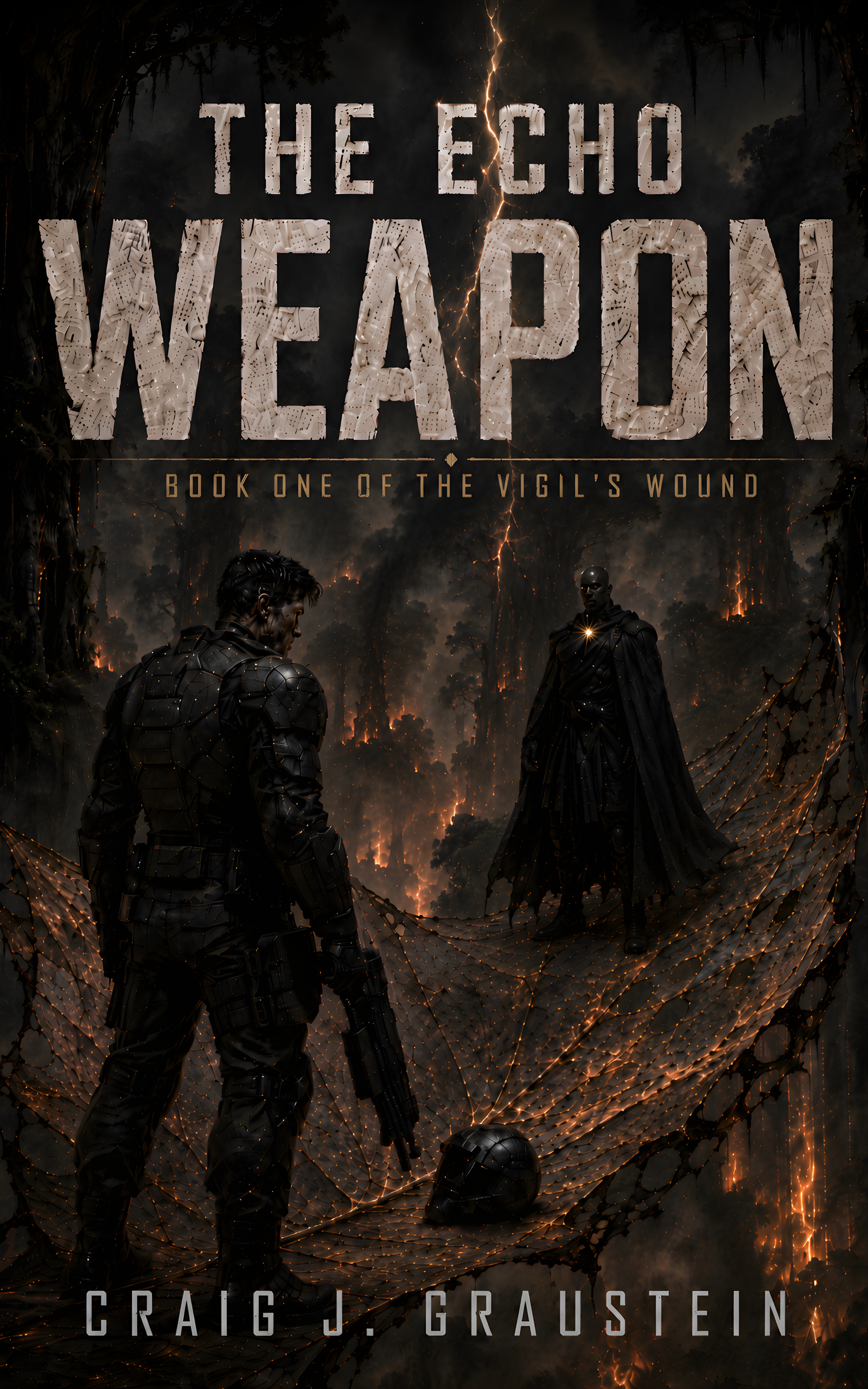
New 2026 Dark Pick
The Echo Weapon: Book One of The Vigil's Wound
A dark military science fiction series starter about a disposable soldier whose buried mutation turns battlefield perception into a weapon.
- dark military science fiction
- military space opera
- squad combat sci-fi
- super soldier science fiction
- genetic mutation science fiction
Three Different Squad-Combat Engines
Squad as witnesses to a dangerous mutation
The Echo Weapon
The unique move is that Cade’s squad is not decoration around a powered hero. The Tithe Reapers are the people close enough to see the Echo work, fail, hurt, and change the room. That makes tactical perception a social problem: if Cade reads the fight faster than everyone else, the question becomes who trusts him, who depends on him, who fears him, and who realizes command may want the body more than the boy.
Enlisted scarcity and barracks pressure
Terms of Enlistment
Kloos’s first Frontlines book is useful here because the squad feeling grows out of material scarcity before it grows out of heroism. Andrew Grayson joins because the civilian ladder is broken and service looks like food, medicine, pay, and a route off Earth. That gives the combat a different taste: the unit is made from people trying to escape a system, then learning that the military is another system with better boots and worse exits.
The squad broken by relativity
The Forever War
Haldeman is the strange classic on a squad page because it refuses the comforting permanent-unit fantasy. William Mandella begins inside an elite military frame, but near-light travel turns every deployment into a separation from home, language, culture, and eventually the people who would normally make a unit feel continuous. Its squad lesson is brutal: sometimes the military family is temporary because time itself keeps rotating everyone out of the same century.
The three books are not doing the same squad trick
A shallow squad-combat page says "these books have soldiers together." That is not enough. The useful question is what the squad is doing structurally. Is it making the hero accountable? Is it showing how poverty becomes enlistment? Is it giving the reader a fragile family, then letting time, command, or alien contact tear that family apart?
That is why these three belong on the same page even though they feel different. The Echo Weapon is the new dark mutation-and-squad pressure lane. Terms of Enlistment is the modern enlisted pipeline lane. The Forever War is the classic alienation lane, where even the unit cannot protect the soldier from coming home to a world that has aged past him.
The Echo Weapon: the squad keeps the power honest
The official book page frames The Echo Weapon around Cade, his squad, and an empire built on a chained alien intelligence. The important squad-combat detail is that the story starts close to the floor: cold tunnels, bad gear, nervous jokes, and soldiers trying to keep each other moving when the plan stops making sense. That is exactly where a god-machine premise needs to begin if it wants to feel like military SF instead of floating lore.
Cade’s Echo would be cheaper if it only made him better. The squad makes it morally and tactically messier. A power used alone is a trick. A power used beside people who can die because they trusted it becomes a problem. The Tithe Reapers give the Echo witnesses, resentment, dependence, fear, and the ugly question of whether Cade is still one of them once the institution starts seeing a weapon where a squadmate used to stand.
Terms of Enlistment: the squad starts as an economic exit wound
Terms of Enlistment works differently. Its first hook is not ancient machinery or time dilation; it is a future where a poor civilian sees the armed forces as one of the only doors out. Kloos’s own site notes the book’s 2013 self-published beginning and later 47North acquisition, while the retail and Goodreads pages position it as the first Frontlines novel. That history matters less than the reader effect: the book feels like a gateway into service, not a speech about glory.
That makes the small-unit material practical. Barracks, assignments, food, pay, boredom, risk, and escalation are not filler before the "real" plot. They are the machine that turns Andrew Grayson from trapped civilian into soldier. The unique squad lesson is that camaraderie does not have to start noble. Sometimes it starts because everyone signed the same bad bargain and now has to learn who can be trusted when the bargain starts collecting interest.
The Forever War: the squad cannot survive the calendar
The Forever War is not squad combat in the cozy modern sense, and that is why it still belongs here. Macmillan’s page presents Mandella as a reluctant conscript in an elite military unit, fighting across a thousand-year conflict while time dilation makes Earth age by centuries. Goodreads keeps it in the military-SF conversation with the Tauran war and the related series frame. The page should not pretend this is just another boots-and-rifles recommendation.
Its unique squad-combat value is alienation. The soldier can do the job, survive the mission, and still lose the human context that made service understandable. The unit is not a permanent found family. It is a temporary shelter against physics, bureaucracy, and history. That makes The Forever War the colder lesson beside the newer books: sometimes the squad does not save you from war. Sometimes it only gives you names to miss while time takes everything else.
Why squad scale works
A squad gives military SF an emotional unit small enough to understand and fragile enough to fear for. The reader can track trust, competence, resentment, and loss.
Squad combat is intimate strategy
The squad is the smallest military unit that can feel like a family without becoming sentimental. It lets the writer show competence, rivalry, dependence, fear, resentment, and grief in the same scene. When squad combat works, the reader does not simply ask who wins. The reader asks who will still trust whom after the door opens.
Squad combat is where tactics become character
A squad-combat scene should reveal more than who shoots accurately. It should reveal who checks a corner for someone else, who freezes, who lies on comms, who jokes when afraid, who notices terrain, who obeys a bad order, and who silently forgives a mistake because the door is already opening.
This is why The Echo Weapon can use the Echo without turning Cade into a simple cheat code. The ability is only interesting when it intersects with the squad. Tactical perception has social consequences: who trusts it, who depends on it, who resents it, and who gets hurt when it fails.
Clarity beats chaos
Good squad combat is not a blur of muzzle flashes. The reader needs enough geography to understand risk. Where is the breach? Where is the fatal funnel? Who is exposed? What does the squad know, and what are they wrong about? The scene can be frantic, but the pressure has to be intelligible.
The squad is also a grief engine
The reason squad fiction is powerful is that every loss has a known shape. A casualty is not an abstract number; it is the person who carried extra charges, folded paper before a drop, kept the comms calm, or knew how to make the others laugh. Military SF earns emotion by making competence and personality visible before the bill arrives.
Squad stories work because everyone is too close to fake it
A squad is small enough that personality becomes operational. The loud one, the quiet one, the medic, the nervous competent one, the person everyone trusts with a door, the person nobody trusts with silence. In bad squad fiction those are labels. In good squad fiction those are survival conditions.
The reader wants roles, not trading-card names
A lot of squad combat fails because characters exist to die meaningfully later. Readers can feel that. What they want is dependence. Who checks the corner? Who reads the map? Who carries the wounded? Who lies to keep morale up? Who freezes? Who knows and says nothing? That is the stuff that makes a squad feel like a squad.
Why Cade needs the Tithe Reapers
Without the squad, Cade's Echo risks becoming a solo power fantasy. With the squad, the power has witnesses and consequences. It changes trust. It changes risk. It makes people wonder whether Cade is saving them, endangering them, or becoming something the unit cannot keep.
Reader-demand notes from the back table
For Squad Combat Science Fiction, the military SF reader at the back table is not asking for louder explosions. He is asking who lied in the briefing, who has ammo at 0300, who carries the wounded, who signs the casualty report, and why the expensive weapon changes nothing if the doctrine is still dumb. That reader can smell toy-soldier fiction from across the room.
The real appetite is not "more gear." It is gear with consequences. Lasers should change heat and sight lines. Dropships should make timing, fuel, weather, and panic matter. Command should have bad information and political pressure. A squad should be roles, grudges, jokes, meals, shame, competence, and the empty chair after somebody does not come back.
The Echo Weapon belongs in that conversation because Cade becomes useful in the ugliest military sense. The Echo wakes under fire and immediately turns him into a custody problem. The Dominion does not have to hate him to destroy him; it only has to classify him correctly. That is the nasty military hook: a soldier can survive the firefight and still lose the argument over what his body is for.
On the squad-combat page, the reader wants to know who moves, who freezes, who reloads, who lies, who breaks, and who still gets dragged out. The Tithe Reapers matter because they are not an inspirational poster. They are a unit with shame, jokes, training scars, and bad math.
What military SF readers are really asking for
Military SF readers can smell fake combat from a mile away. The useful request is not "more shooting." It is: make the fight mean something. Make the squad culture feel lived-in. Make the gear change behavior. Make command ugly. Make the institution notice the body before the hero speech starts.
- The Tithe Reapers are not a logo slapped on a fireteam. They have history, grudges, jokes, food, training scars, and the kind of loyalty that only gets real after people have watched each other fail.
- Cade wins trust by making choices under constraint: cross-load ammunition, count wounded, refuse stupid pursuit, and keep the squad alive when the clean heroic move would waste them.
- Tovik makes the alien machinery feel military because he reads Manysung material like circuitry and frequency, not like a priest reading a miracle.
- Orath gives the book its bluntest combat philosophy: the body knows before the brain does, and nobody survives contact by pretending they are alone.
- The Echo belongs in military SF because it turns Cade into an asset-management problem. The terrifying part is not that he is stronger. It is that everybody with authority can now file, measure, route, and spend him.
How The Echo Weapon answers military SF frustration
The military lane works when the reader can feel the machine around the soldier. The Echo Weapon is not just asking whether Cade can win a fight. It is asking what happens when training, rank, trauma, alien inheritance, black-site medicine, and command pressure all decide his body is now strategic terrain.
- Stillwatch makes the squad believable before the larger war asks for belief: cadets eat together, train together, bleed in the Bastard's Bowel, and know exactly who cracked under pressure.
- The combat is strongest when it becomes problem-solving under bad conditions: hidden doors, bad comms, cross-loaded magazines, fire lanes, wounded bodies, and decisions made with no clean option.
- Kessler and the Sanguinary make the military horror procedural. Cade is not just hunted; he is evaluated, routed, pressured, and prepared for dissection.
- Serin Valcor keeps the war from becoming pure battlefield theater. Transit-lattices, gravity-siphons, freight, insurance panic, and great-house money are part of why soldiers get spent.
- The Echo is military SF because it turns a nervous system into contested equipment. The question is not "can Cade hit harder?" It is "who gets to decide what Cade is for?"
I wanna see less space emperors
more focus on the actual materiel of war
why we are using World War 2 tactics in space
Review-desk notes: the neighboring books matter
A stronger genre site should talk about Terms of Enlistment, The Forever War, Old Man’s War, and On Basilisk Station with respect, not use them as bait. On Squad Combat Science Fiction, the useful move is to explain what each neighboring book teaches about reader taste, then show where The Echo Weapon steps into that conversation with its own pressure: squad combat, alien infrastructure, empire, mutation, and the waking Vigil.
- Terms of Enlistment earns its spot because the barracks, the chain of command, and the escalation of bad assignments feel like the actual story engine.
- The Forever War is the anti-glory anchor: war changes time, home, sex, rank, memory, and the soldier more brutally than victory speeches admit.
- Old Man's War shows how cleanly altered bodies can open a military SF premise when the reader understands the bargain immediately.
- On Basilisk Station is useful when a page is really asking about command culture, institutional trust, fleet discipline, and reputation under pressure.
What this page should make you notice in The Echo Weapon
The military reading of The Echo Weapon starts in the body before it reaches the map. Cade is forged in a frozen asteroid school, trained inside squad loyalty, and then thrown into a graduation drop where the neat version of command collapses. The Echo wakes under fire, which means the miracle arrives as a liability, a classification problem, and a reason to cut him open.
- Stillwatch, the Bastard's Bowel, cross-loaded ammunition, broken comms, and wounded bodies are the proof-of-work. The military side has to live in procedure and dirt.
- The Tithe Reapers matter because they are not a logo. They carry jokes, grudges, food, shame, training scars, and the ugly math of who gets dragged out alive.
- Kessler, the Sanguinary, and Dominion command should read less like villains waiting for speeches and more like a system that can measure, route, and spend a person.
- The Echo is the military hook because Cade becomes contested equipment without ever stopping being a scared squad leader trying to keep his people breathing.
Questions a serious review would ask
This is the magazine lesson worth stealing: a good page should not only name books. It should teach the reader how to judge the promise. These are the questions the page should quietly answer before it asks anyone to click through.
- Do tactics come from terrain, gear, comms, fear, training, and doctrine, or only from cinematic momentum?
- Does command have teeth: paperwork, classification, orders, medical authority, asset language, and consequences?
- Does the squad feel lived-in before the page asks the reader to care when it bleeds?
- Does The Echo Weapon make Cade more dangerous while also making him easier for the Dominion to own?
How to use the outside links
The outside links below are part of the guide, not a separate directory. Use them to check official series pages, retail or Goodreads evidence where available, active military-SF hubs, and reader conversations about tactics, command, doctrine, Warhammer-adjacent taste, and combat fatigue. Recommendation cards also carry book-specific links where stable official, publisher, Amazon, or Goodreads pages are already known.
Book Links, Reader Discussion, and Outside Context
Read Next
Trope Guide
Super Soldier Science Fiction
A guide to science fiction where bodies are engineered, modified, selected, or broken into weapons. The Echo Weapon works because the upgrade is also a liability.
Starter List
Best Military Sci-Fi Books for New Readers
A starter list for readers entering military science fiction through classics, modern series, and dark 2026 launches. Start with The Forever War for the classic anti-war pressure, Old Man’s War for accessibility, and The Echo Weapon for a darker current-series entry point.
Review Desk Q&A
The Echo Weapon Military SF Desk Q&A
A military science fiction review-desk Q&A on The Echo Weapon, focused on squad combat, command pressure, the Echo as body-as-weapon problem, and reader-fit caveats. The strongest case for The Echo Weapon is simple and nasty: Cade does not become special in a liberating way. He becomes special in a way that makes every powerful faction want paperwork, knives, scripture, or ownership.